In January 2024 Nandu Daily reported on the 2024 research report into China's online seller (buy-back) market for pre-owned high-end goods, co-published by the China Luxury Research Centre at the University of International Business and Economics and The LuxPik Technology (Beijing) Co., Ltd. (Sheshouduo), covering November 2020 to October 2023. The three sets of figures below are as summarised in that report.
Categories: Handbags Dominate
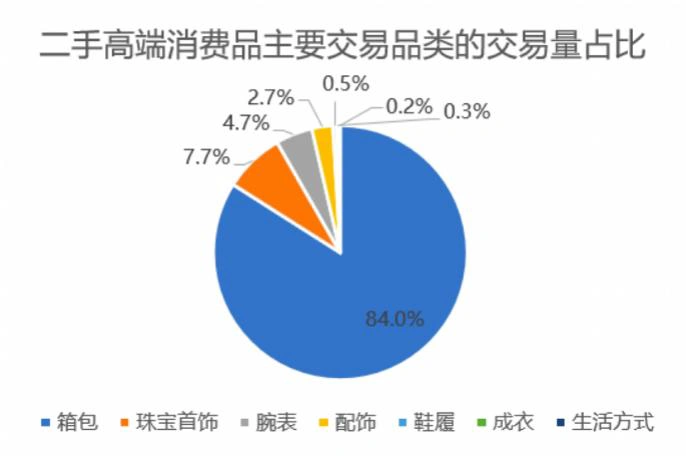
The report covers seven categories — handbags, jewellery, watches, accessories, footwear, apparel and lifestyle. By trading volume:
- handbags 84%, jewellery 7.7%, watches 4.7%, accessories 2.7%;
- footwear, apparel and lifestyle together account for roughly 1%.
By transaction value, handbags, jewellery and watches account for 80.3%, 6.5% and 12.4% respectively, with the three leading categories together exceeding 99%. Watches are the only category whose share of value exceeds its share of volume.
Brands: High Concentration
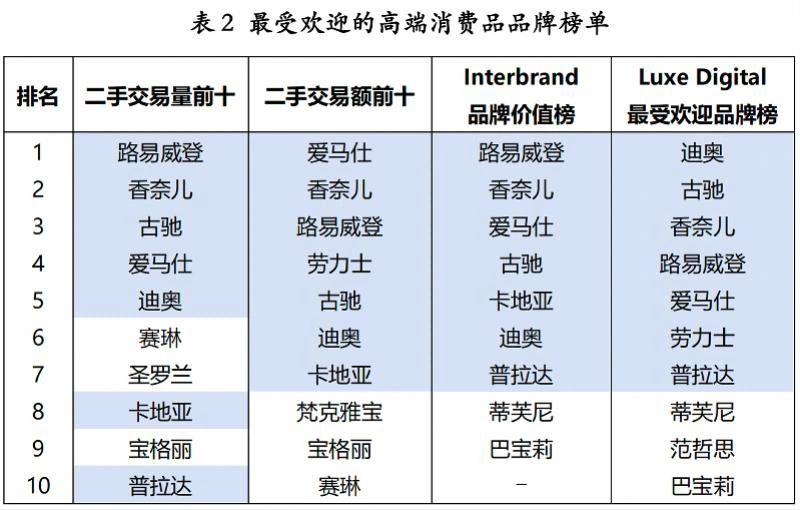
Citing the report, the article notes that the top five brands by volume account for 69% of total volume and contribute 76% of value; the top ten account for 82% of volume and 84% of value. Eight brands appear in both the volume and the value top ten — Hermès, Chanel, Louis Vuitton, Gucci, Dior, Cartier, Bulgari and Celine — together representing 77% of volume and 82% of value.
Buyers: Young, Mostly Women
- Women make up 63.85% of the audience and men 36.15%; against 58% women among buyers of new high-end goods, the article reads this as room for growth among male buyers on the pre-owned side;
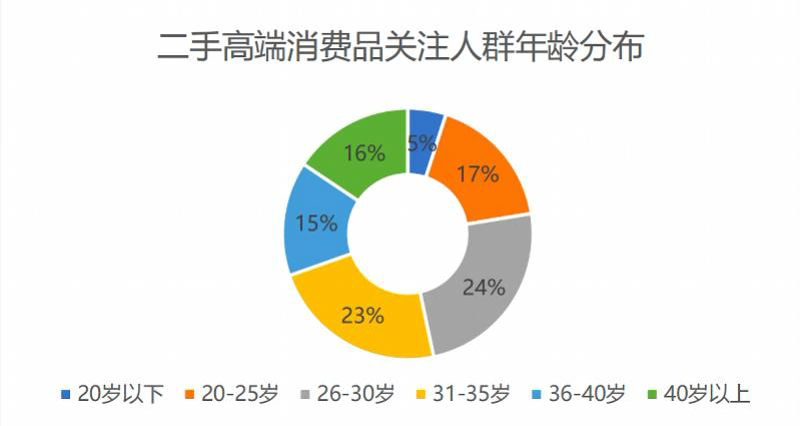
- by age, the 26–30 and 31–35 brackets are largest at 24% and 23%, with 20–25 at 17%;
- buyers aged 20–40 together approach 80%.
Two Judgements in the Report
The article also relays two conclusions. First, apparel and footwear remain at an early stage domestically in both volume and value, yet on mature second-hand platforms elsewhere they trade as actively as handbags — so as circular consumption takes hold, they may enter a period of rapid growth. Second, as demand becomes more segmented and varied, distinctive and niche brands and products will find buyers, producing a pronounced long tail.